

Glasses for Your AI Agent
Disappointment in AI systems
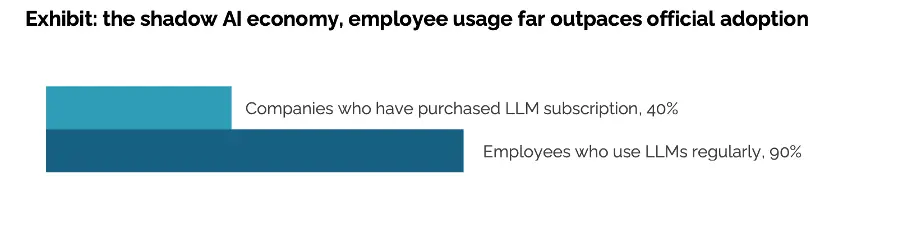
MIT’s State of AI in Business Report 2025, a widely cited study, poured cold water on the hype surrounding generative AI, reporting that only 5% of AI projects achieved a positive return on investment. One highlighted finding stated that although 90% of employees reported using Large Language Models (LLMs) in their daily work, only 40% of companies had purchased LLM-related subscriptions.
Common approaches fail to read data properly
So, what explains the gulf we see between personal and organisational adoption? After all, many expect the most impactful efficiencies to arise once AI connects to the vast realms of organisational knowledge. A major reason for this gap is that most AI systems struggle to reliably read and structure enterprise documents, the very foundation required for accurate answers. Knowledge is spread out over various file types and data repositories, and even though it is unintuitive, our current software is just not that good at reading it. Here is an example (if you don't speak German, don’t worry, our parsing solution speaks multiple languages, so you don’t have to):
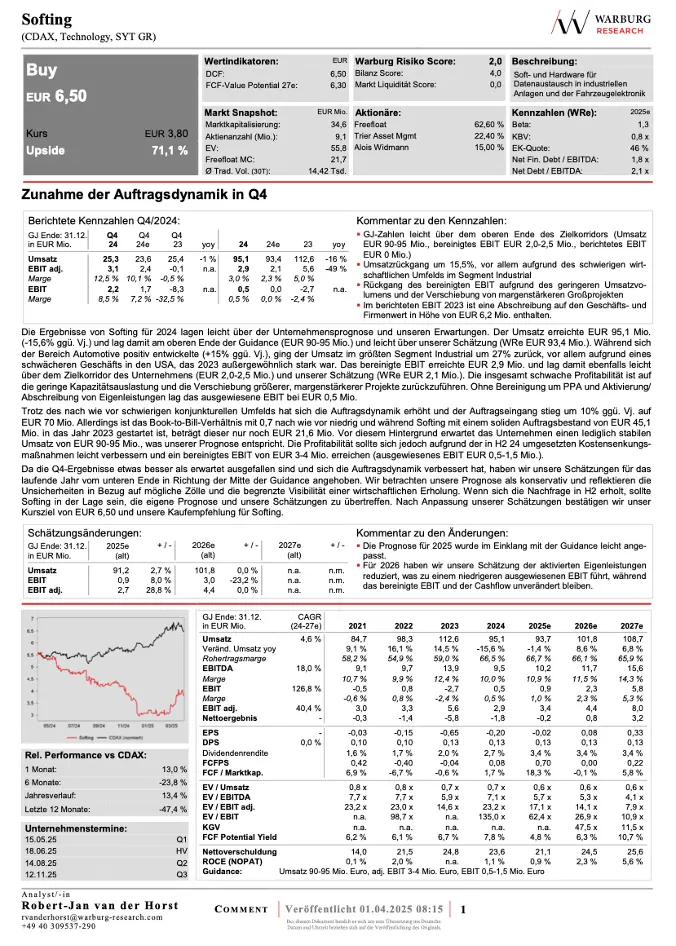
We would like an LLM agent to access this financial report consisting of dense text, tables and figures as part of a large conglomerate of documents. Many AI projects would use an LLM like ChatGPT to extract this information. What does this look like? In its interface version, outputs are stochastic, and thus what you see may vary, but here is a common example:
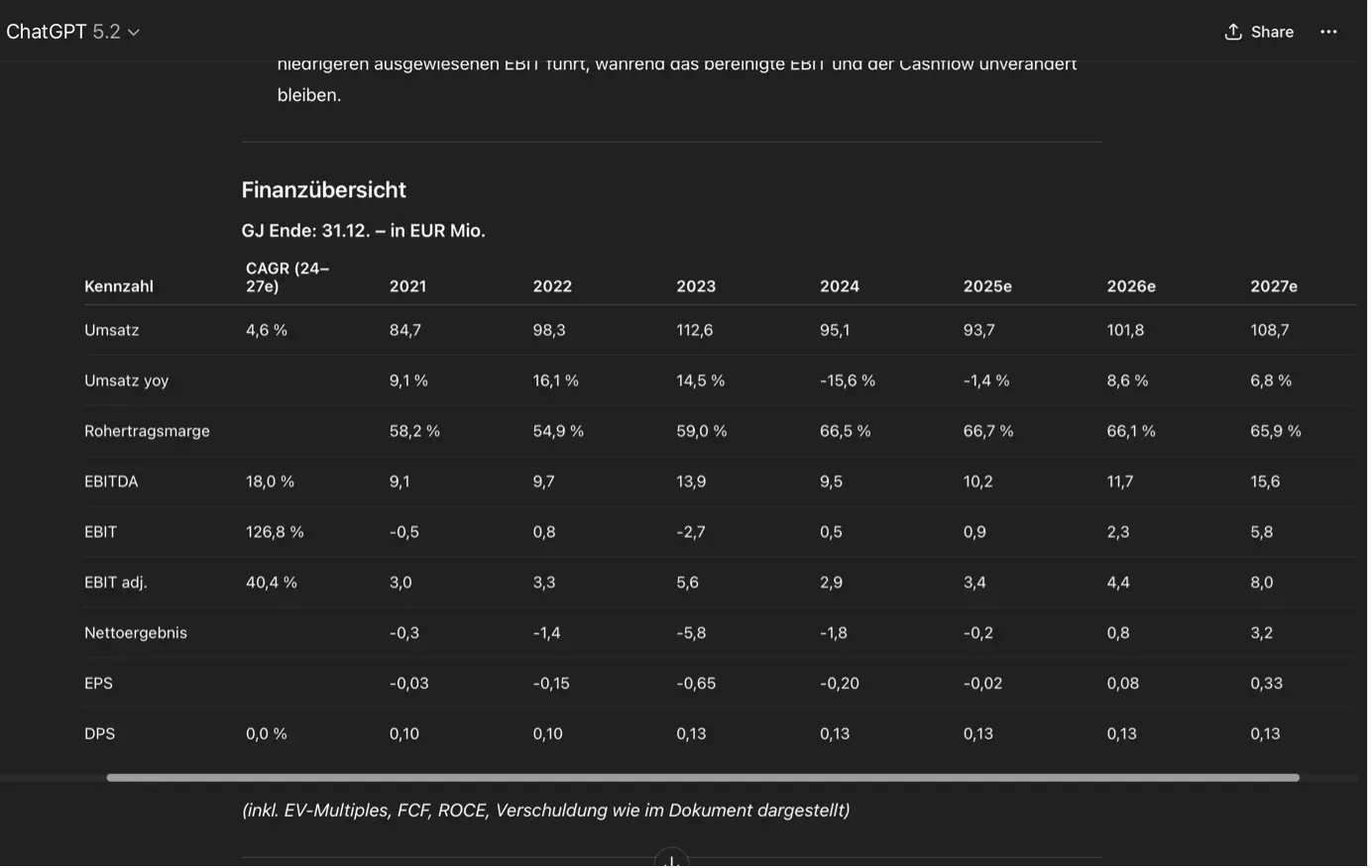
As you can see, the complex table from the bottom right is cut off in the middle. Forgivable, perhaps, if it were a single occurrence, but now imagine every company document being 15% off. If the agent you are building requires 3 pages of context to answer the average user question, its likelihood of getting it right drops to about 61%. In other words, 39%, or more than every third request, will lead nowhere. After each page loses a bit of information, the losses compound: after one page you are missing 15%, after two pages you are down to roughly 72%, and after three pages only 61% of the full content remains. An agent that requires tens of pages will hardly ever get one right. No meaningful ROI can be extracted from such a system, and disappointment, as seen in the MIT Report, is to be expected.
ByteIt beats large providers on extraction benchmarks
The good news is that a new generation of dedicated AI models called Visual Language Models (VLMs) can achieve far better results, especially when playing to each model’s strength. This is what ByteIt does. We first analyse the content of a document and then decide which extraction model is most appropriate. This not only allows our example table to be parsed much more accurately,
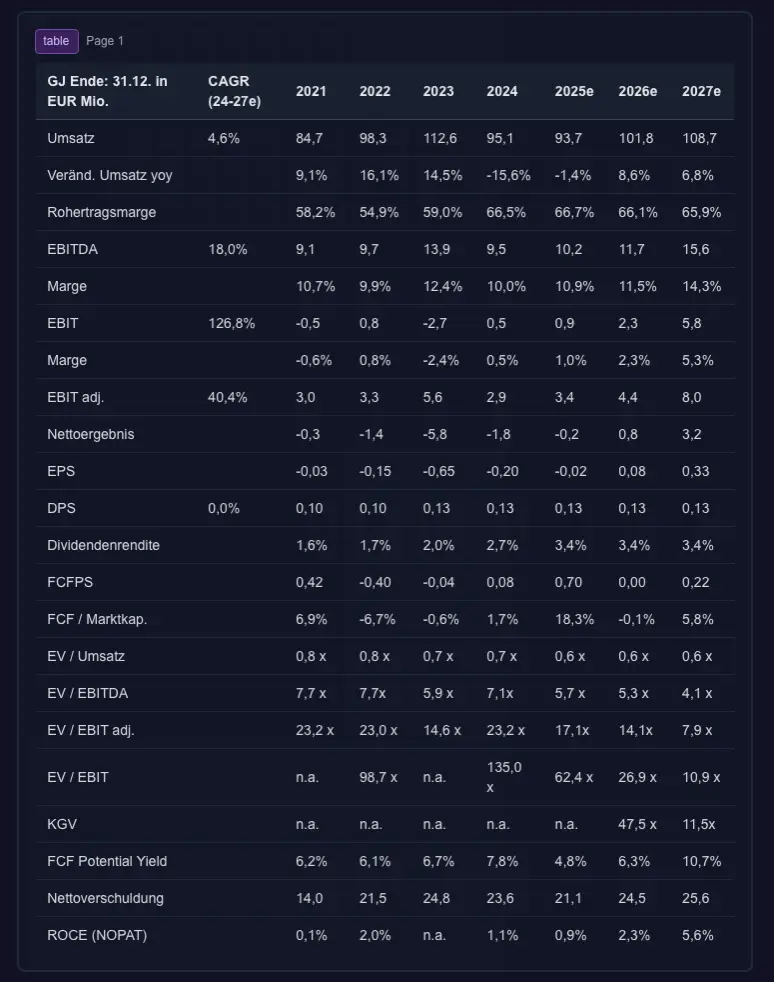
but also extends to strong results in parsing benchmarks: The most authoritative international benchmark for document parsing is the OmniDocBench. It assesses text, layout and table extraction as well as formulas. Here is how ByteIt v1.0.0 performs on this benchmark:
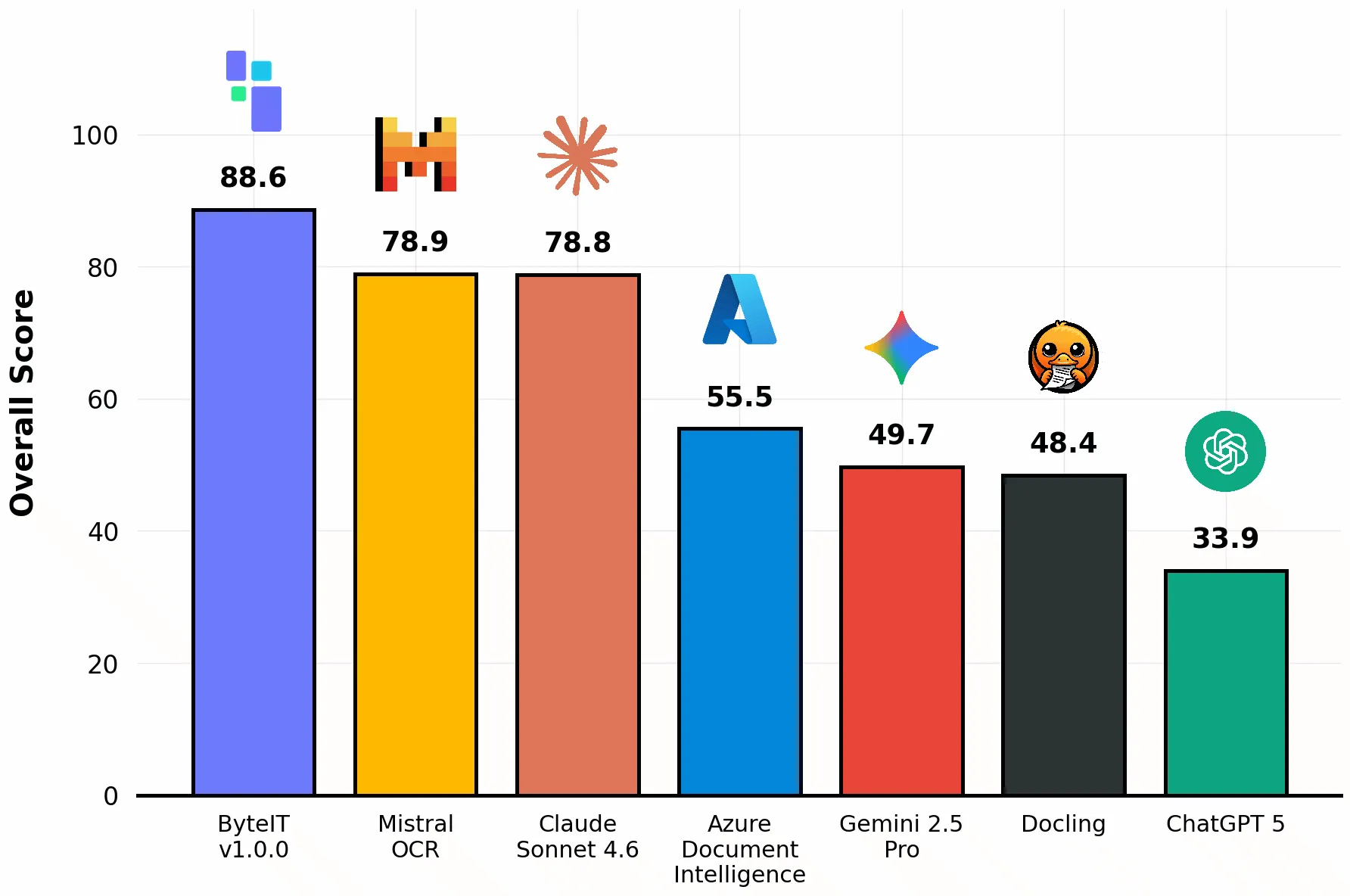
In the overall score comparison ByteIt’s v1.0.0 comes out on top compared to the most commonly employed parsing solutions. It especially outperforms ChatGPT and Microsoft’s Document Intelligence (DocInt), which are both widely used for document preparation today. Why becomes clear when looking at the benchmark’s sub-categories:
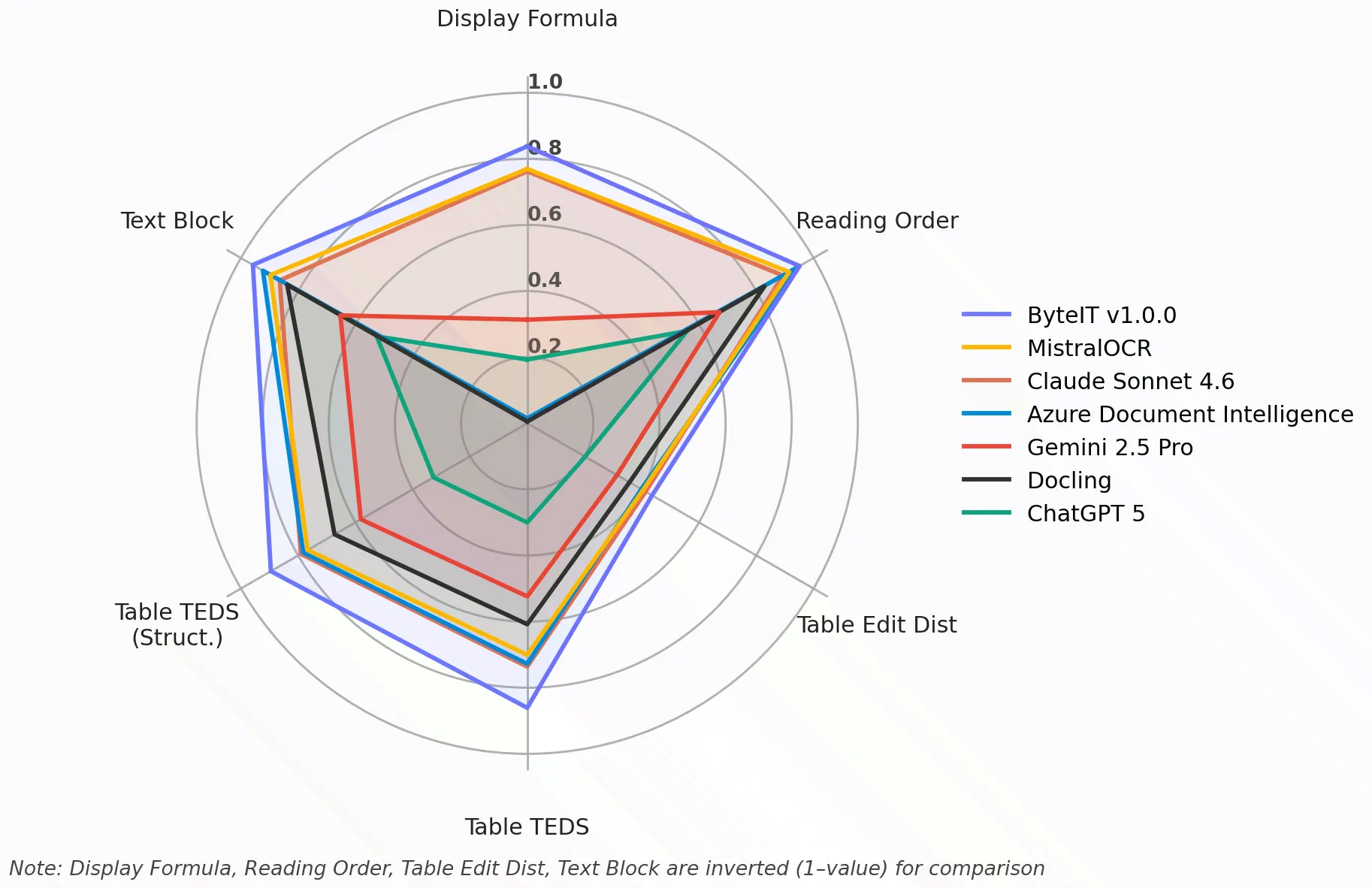
While several models perform similarly well on pure text extraction (“Text Block”) and Layout (“Reading Order”), ByteIt’s mix of models wins every category overall and considerably outperforms other models in tables and formulas. This is significant as tables are the backbone of most business applications, and enabling agents to understand tabular information can unlock many business cases.
Document parsing is a difficult problem, and we believe in identifying best-in-class technology for different use cases and applying them dynamically. Your AI agent is only as good as what it can read, and today, many agents are half-blind. The next wave of AI value will not come from bigger models, but from models that finally understand documents perfectly. That starts with vision: ByteIt is building the eyesight layer for AI agents.
ByteIt v1.0.0 will be made available in the coming days.